Is it actually free?
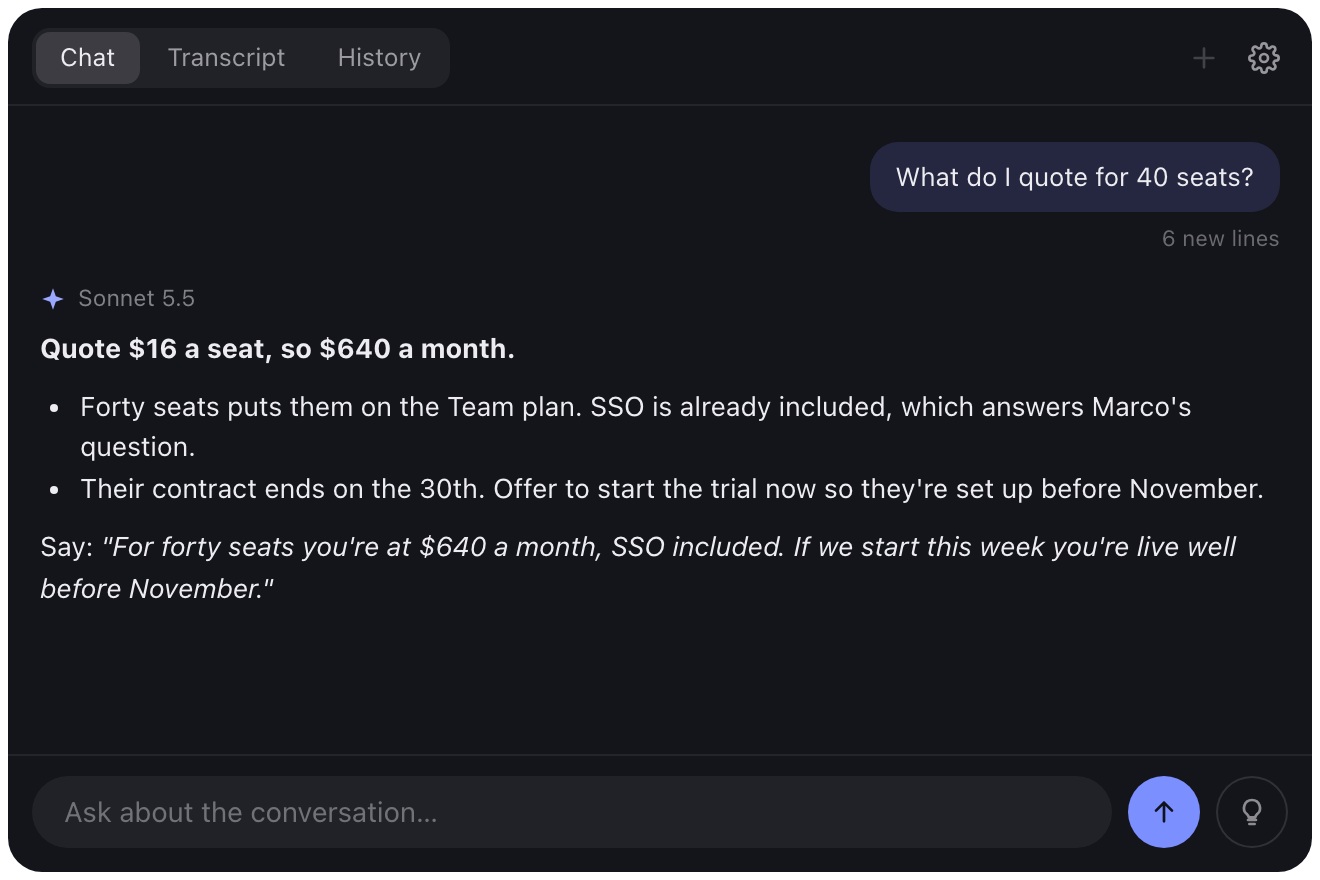
Glint is. The AI behind it costs whatever your provider charges: usually a few cents a question with an API key, or nothing extra if you sign in with Claude Code or Codex on a plan you already pay for.
Can the other people see it?
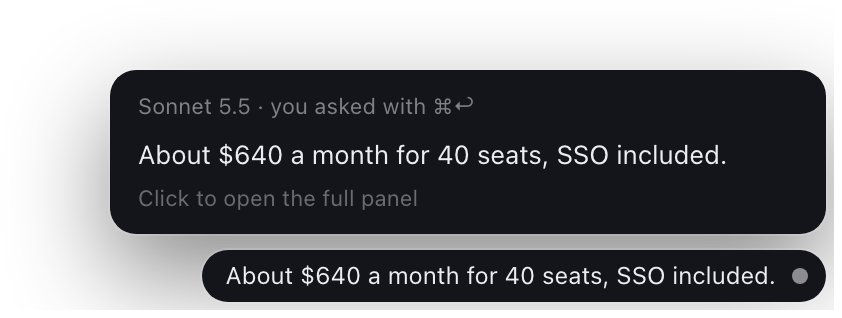
Not in a screen share or a recording. Invisible mode is on from the start. Someone looking over your shoulder is another story, which is what discreet mode is for.
Where does my audio go?
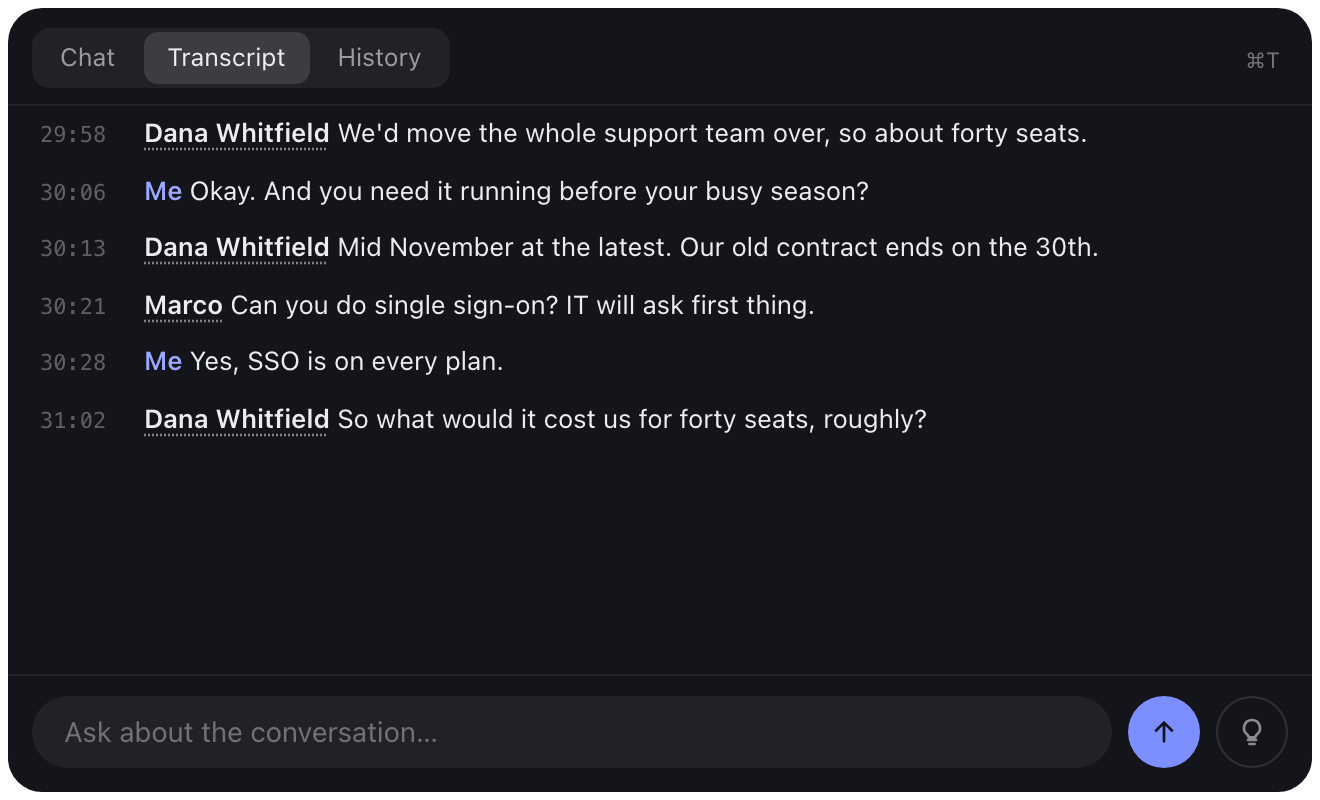
Nowhere. It's transcribed on your computer. When you ask something, the question, the recent transcript and a screenshot go to the AI you picked, and nothing goes to us. There's no us to send it to.
Windows?
Yes. Windows 10 (version 2004) or later, 64-bit. Everything works the same, with Ctrl in place of ⌘. Install it on Windows.
Can I use it in an interview or an exam?
Glint transcribes other people, so get their consent where the law asks for it. And don't use it where outside help isn't allowed.